

Chapter 1
Lesson Introduction
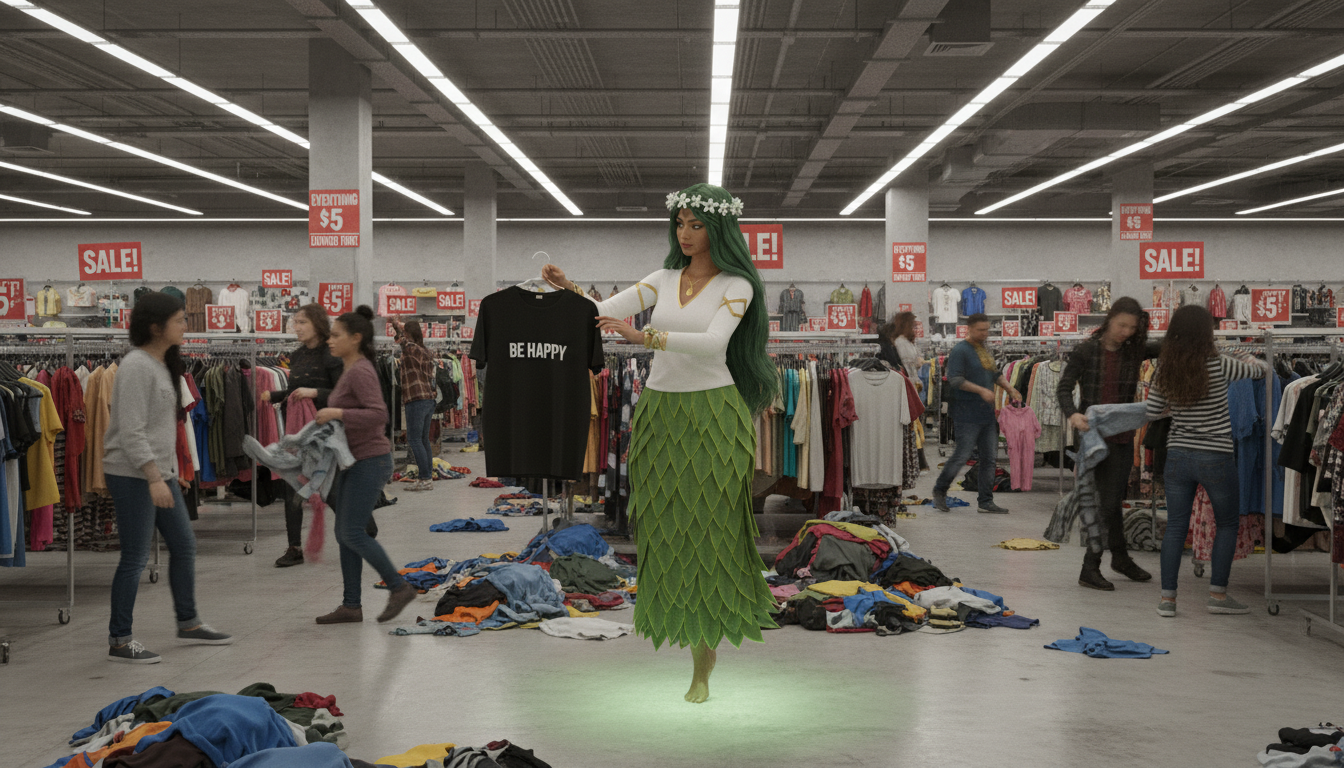
Let’s address the package at the door: we are living in a world engineered to make us think we’re one purchase away from happiness. A better life, a better body, a better vibe—delivered in two days with free returns. But here’s the thing: consumption has become a sport and capitalism is the referee, blowing whistles every time we don’t spend money.
The truth? We don’t need more stuff—we need more connection. More purpose. More presence. The Consumer Detox isn’t about living in an empty apartment with one wooden spoon. It’s about cutting the strings that make companies billions while making your mental well-being bankrupt.
Learning Objective
By the end of this lesson, participants will be able to:
By the end of this lesson, participants will:
• Identify emotional and psychological triggers behind impulse buying
• Evaluate whether purchases align with values and needs
• Understand the environmental cost of fast shipping & fast satisfaction
• Practice mindful consumption and resource-conscious living
-
Part 1: The Dopamine Trap
Every time you hit “add to cart,” your brain throws a party. Capitalism knows this—and manipulates that little chemical rush to keep you hooked. We’ll expose the science of why buying feels good… until it doesn’t.Part 2: Convenience Has a Carbon Footprint
Fast shipping is cute until you see the emissions report. Returns often go straight to landfills. “Sustainable packaging” is just a costume when the system behind it is wasteful by design.Part 3: Value ≠ Volume
Minimalism isn’t about being aesthetic—it’s about being free. When you disconnect happiness from possessions, you clear space (in your life and your home) for what actually matters. -
Activity 1: The Shelf Check
Walk around your home and pick 5 items you bought but barely used (we all have that gadget, candle, or workout band). Ask:
“Why did I buy this? What emotion was I chasing?”
Post one confession in the E3O Forum thread: “Purchased Regrets & Capitalism’s Lies.”Activity 2: The Terra Test
Before your next purchase, run it through these 4 questions:Do I truly need this?
Will I use it more than once a week?
Can I borrow or buy it secondhand instead?
Would I still want it if nobody else saw it?
If you get three “no” answers — close the tab.
Activity 3: The 24-Hour Pause
Anytime you want something online, add it to a wishlist — not the cart. Wait 24 hours. If the desire fades, it wasn’t real. Track how many purchases “mysteriously disappear” when time is allowed to be honest. -
“What am I trying to fill by filling my space?”
Think about what emotional or mental gap your purchases have been masking — and what could fill it more meaningfully.
Story Time
Story Time

ReCOMMENDED REsources
Books
• The Shadows of Consumption by Peter Dauvergne — An unflinching look at how the real cost of our purchases is hidden away in ecosystems and communities far from our hometowns. MIT Press
• Affluenza: How Overconsumption Is Killing Us — and How To Fight Back by John de Graaf, David Wann & Thomas N. Naylor — A clear-eyed exploration of materialism, overconsumption, and how they’re connected to our identity and well-being. Spirituality & Practice+1
Documentaries / Films
• Buy Now! The Shopping Conspiracy (2024) — A full-on expose of the systems built to make us buy more and feel less. Netflix+2Netflix+2
• The Story of Stuff (2007) — A sharp, accessible animated film tracing the lifecycle of products, from extraction to disposal
COMMUNITY MISSION
“Post one thing you donated, repaired, or refused this week in the forum thread.”
Takeaway Message
Breaking up with impulse buying isn’t about rejecting joy — it’s about choosing joy that actually lasts. You deserve a life filled with experiences, not expired trends. You are not the packages at your door. You are the purpose in your choices.