

Chapter 1
Lesson Introduction
Let’s talk about the art of deception—eco edition. Greenwashing is when companies act like they care about the planet just enough to make you feel good about buying from them. It’s when the same brand that dumps chemicals into rivers posts a pastel infographic about “mindful living.” You’ve seen it—eco buzzwords, recyclable-looking logos, fake smiles in linen shirts holding fake plants. This lesson will help you see past the performance.
By the end of this, you’ll spot the fakes faster than a “plant-based” burger with 12 mystery ingredients.
Learning Objective
By the end of this lesson, participants will be able to:
Identify common signs of corporate greenwashing
Evaluate the credibility of environmental marketing claims
Recognize how consumer perception is manipulated through branding
Develop critical awareness of their own purchasing habits and how to resist manipulation
-
Part 1: The Psychology of the Green Halo
We’ll unpack how companies use color, buzzwords, and guilt to make consumers feel sustainable without actually being sustainable. Spoiler: “eco,” “clean,” and “natural” often mean absolutely nothing legally.Part 2: Case Study – Nordstrom’s Cosmetic Recycling Totes
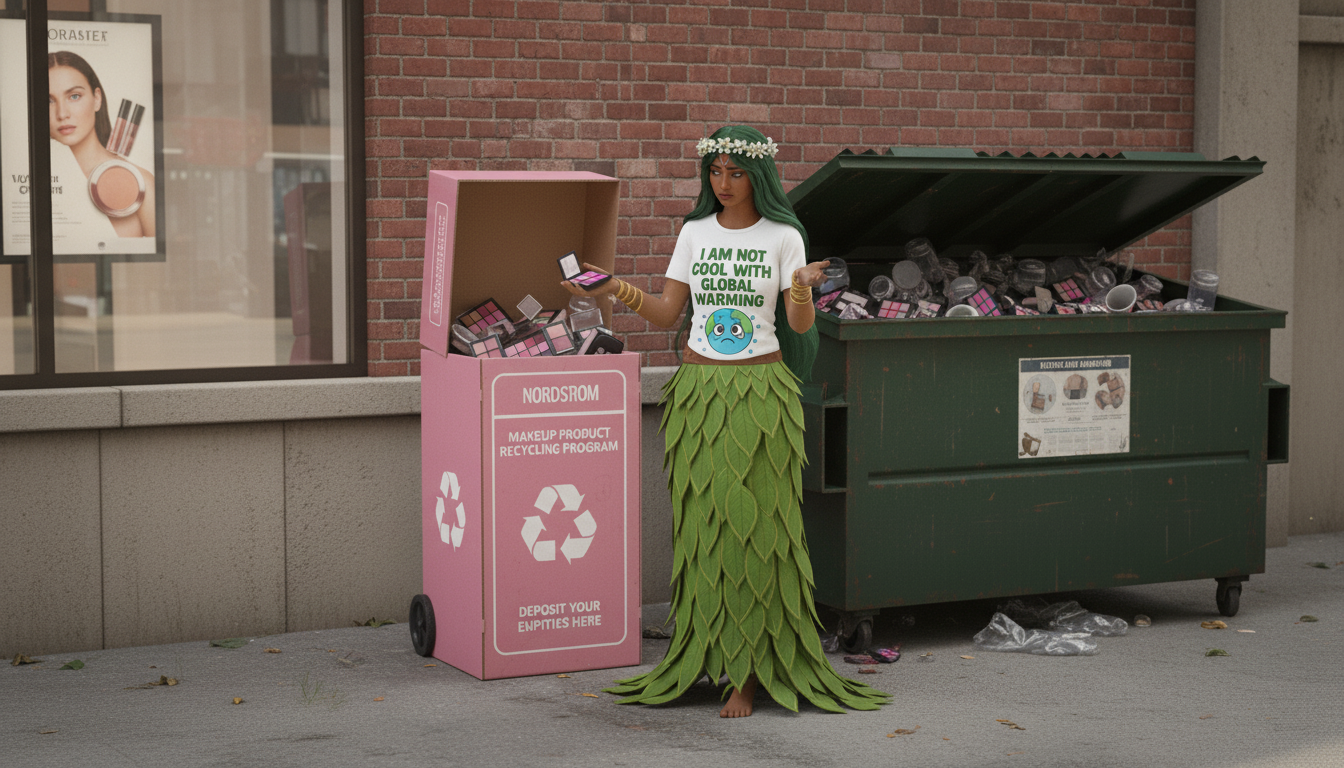
We’ll examine how Nordstrom promotes “recycling” cosmetic waste while partnering with companies that still produce billions in single-use plastic. You’ll learn to read between the tote bag slogans.Part 3: The Cost of Comfort Marketing
Discuss why we fall for it. People want to feel part of the solution—but corporations know that too. We’ll explore how emotional branding exploits that instinct and how to take it back. -
Activity 1: Spot the Faker
Go on a “greenwash hunt.” Find 3 companies that use environmental language in their marketing. Screenshot or jot down what they say. Then dig deeper—check if their supply chain, ingredients, or packaging actually match the message.
Bonus points if you find a “100% natural” product that lists 30 synthetic ingredients.Activity 2: Retail Memory Lane
Think of a store or brand that claimed to be eco-conscious. Did they actually follow through? Were you ever convinced? Write a short “consumer confession” post to share in the E3O Forum about how they fooled you—or how you called them out.Activity 3: Terra’s Challenge – The Rebrand
Choose one brand you think greenwashes. Redesign their ad or tagline honestly. Example: “Nordstrom Beauty — Sustainability (if you squint hard enough).” Post your version in the forum thread titled “Rebranding the Pretenders.” -
“When did you first realize that sustainability was being sold to you as a product, not a principle?”
Reflect on how that moment changed how you see the brands you buy from.
Story Time
Story Time

Terra and the Tote of Lies
Terra didn’t plan to start trouble that day—she just needed a new lip balm. But trouble, as usual, found her near the “Sustainably Yours” display at Nordstrom.
The setup was almost cute—soft green lighting, smiling models, a sign that whispered, “Recycle your empties, save the Earth.” The air smelled like eucalyptus and irony. Terra leaned closer to the big beige tote labeled “We Care.” Inside were piles of old mascara tubes, cracked compacts, and sticky foundation bottles—all “awaiting recycling.”
Except Terra knew the truth. Those little containers weren’t going anywhere but the same landfill where yesterday’s “clean beauty” promises went to die. The tote wasn’t a recycling bin—it was a prop. A photo op for corporate conscience.
She picked up a used lipstick, rolled it between her fingers, and smiled. “Ah,” she muttered, “the sweet scent of performative sustainability.” Then, because she couldn’t help herself, she scribbled on a scrap of receipt paper and slipped it inside the tote:
“You can’t greenwash guilt with good lighting.”
As she walked out—lip balm forgotten, truth restored—she caught her reflection in the perfume counter mirror and grinned. Terra didn’t come to shop; she came to expose the décor.
Takeaway Message
Greenwashing thrives on trust—and distraction. Once you learn to read between the logos, the fog clears fast. Real sustainability isn’t branded—it’s practiced, often quietly, by people and organizations too busy doing the work to market it.