Let’s take trip to Nordstrom Rack! Not to shop. Not to browse. We are going to look inside a trash can! Why would we do that? Who wants to look in a trash can? For the purposes of documentation and discussion, this is the first step in starting a discussion on a topic that encompasses a larger issue.
What is the claim?
Retailers promote store drop-off recycling programs as part of sustainability efforts. Nordstrom’s BEAUTYCYCLE program accepts empty beauty packaging from any brand and places collection bins inside stores. The company states a goal of collecting and recycling 100 tons of beauty packaging and reported reaching that amount earlier than expected. Materials placed in the bins are shipped to TerraCycle for processing, where they are cleaned and separated into plastics, metals, and glass for recycling (Nordstrom, 2020; Waste360, 2020). However, public claims about recycling programs often lack detailed reporting about final material outcomes, recovery rates, or how much material ultimately enters secondary markets rather than disposal streams. Without transparent reporting, consumers cannot easily verify how much material actually becomes new products. We need metrics.
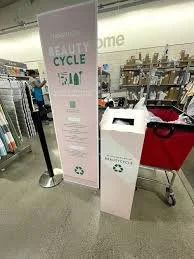
Beauty Cycle Container - OC
Who regulates this?
Environmental marketing claims face federal oversight in the United States. The Federal Trade Commission regulates environmental advertising under Section 5 of the FTC Act, which prohibits unfair or deceptive marketing practices. The FTC’s “Green Guides” provide guidance on how companies must substantiate environmental claims with reliable evidence so consumers are not misled about recycling or sustainability benefits (FTC, 2012). Academic literature describes misleading environmental claims as “greenwashing,” where marketing promises more environmental benefit than evidence supports (Dahl, 2010). Legal scholarship also notes ongoing regulatory efforts to address deceptive sustainability claims through consumer protection law and updated FTC guidance (Rotman, 2020). These frameworks require companies to support claims such as “recyclable” or “sustainable” with credible data and clear disclosures.
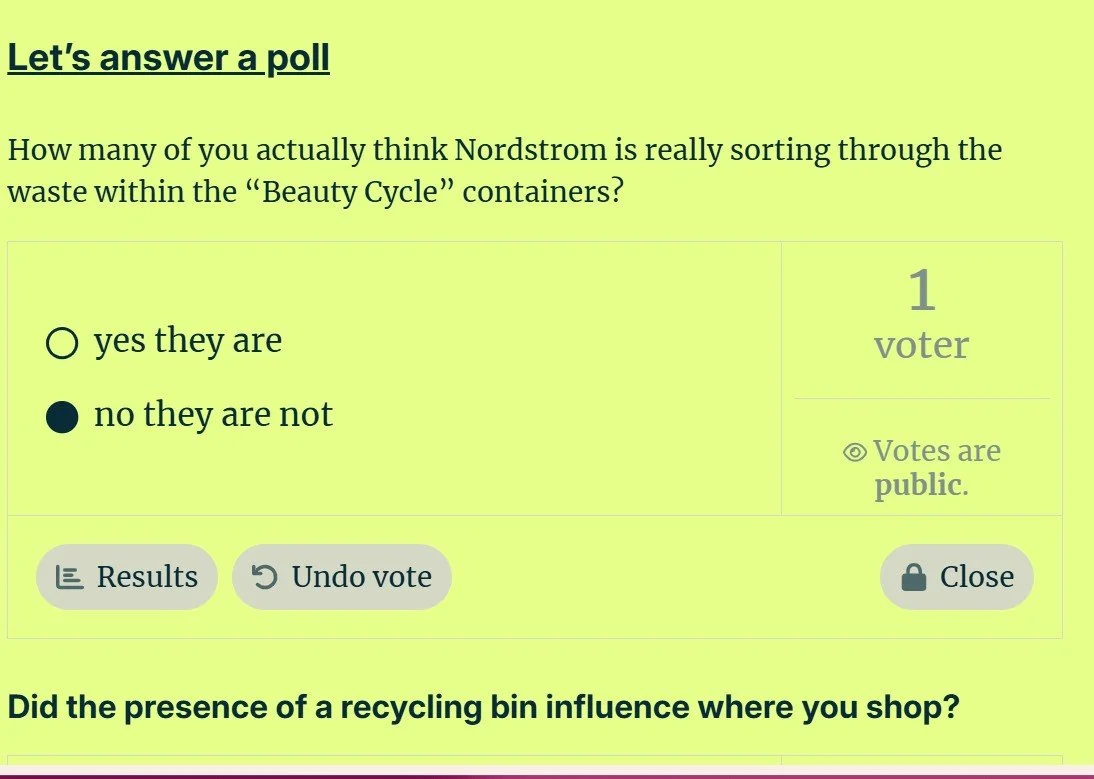
Click the link or image to take you to the poll at the forum.
The key question for consumers is transparency. I want you all to share your perspective by responding to the poll on beauty packaging recycling and consumer trust. Retailers often promote recycling programs with broad sustainability language, but public reporting rarely includes detailed data about how much is collected, processing rates, or final recycling outcomes. If companies want public trust, they should publish measurable results such as annual collection totals, percentage successfully recycled, and the facilities processing the material. Without that information, consumers must rely on marketing claims rather than verified environmental performance. A public discussion about programs like BEAUTYCYCLE should therefore focus on accountability. Consumers should ask for clear evidence showing what happens to the material after drop-off and whether recycling outcomes match the environmental promise.
Why should you care?
Consumers spend time cleaning and transporting beauty containers to store recycling bins because they believe the material avoids landfill. If the program lacks verified recycling outcomes, consumers make purchasing and disposal decisions based on marketing claims rather than measurable environmental results.
Trust also affects where people shop. When retailers promote sustainability programs without transparent data on collection and recycling rates, consumers lose the ability to evaluate whether their actions reduce waste or simply shift responsibility without real environmental benefit.
Poll and discussion available here
Share your perspective by responding to the poll on beauty packaging recycling and consumer trust here: https://field.discourse.group/t/environmental-concerns/14/5?u=moderator
References
Dahl, R. (2010). Greenwashing: Do you know what you’re buying? Environmental Health Perspectives. https://pmc.ncbi.nlm.nih.gov/articles/PMC2898878/
Federal Trade Commission. (2012). Guides for the Use of Environmental Marketing Claims (Green Guides), 16 CFR Part 260. https://www.ftc.gov/legal-library/browse/rules/green-guides
Nordstrom. (2020). Nordstrom launches BEAUTYCYCLE nationwide. https://www.prnewswire.com/news-releases/nordstrom-launches-beautycycle-nationwide-301144082.html
https://press.nordstrom.com/static-files/23767662-9aca-4775-9a83-01870a3de3e0
Waste360. (2020). Nordstrom’s cosmetic customers can recycle product packaging. https://www.waste360.com/recycling/nordstroms-cosmetic-customers-can-now-recycle-product-packaging
Rotman, R. (2020). Greenwashing no more: The case for stronger regulation of environmental marketing claims. University of Missouri Law Review. https://scholarship.law.missouri.edu/facpubs/972/