357,699 Public Comments Later. What Happens Now to the ESA “Harm” Definition?
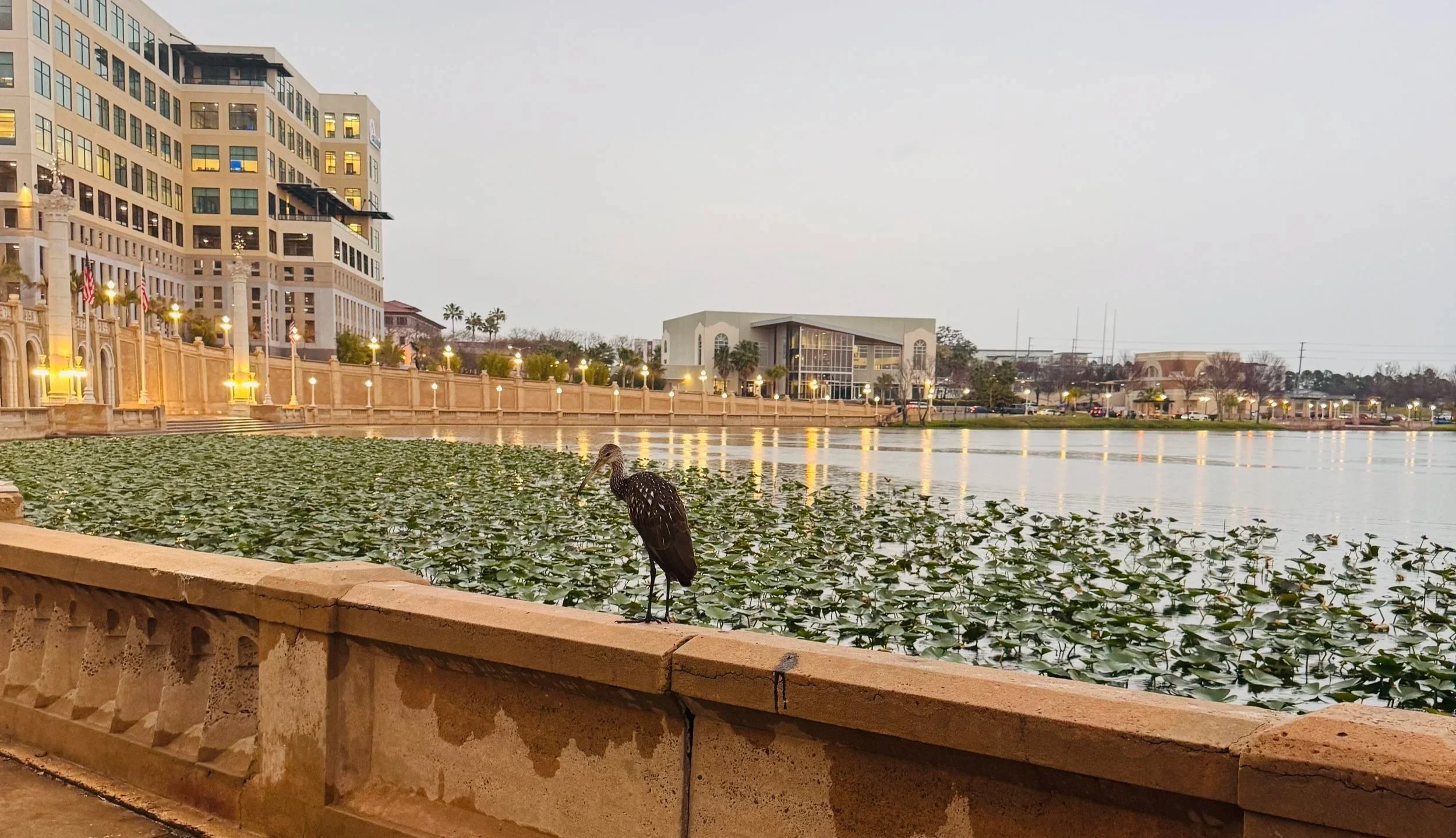
Fearless Limpkin standing at Lake Mirror, Lakeland, Florida
The public comment period for docket FWS-HQ-ES-2025-0034-0001 officially closed on May 19, 2025. As of March 1, 2026, the total number of comments submitted reached a whopping 357,699.
You can view the full docket and comment archive here:
The document page showing total submissions is available here:
The proposed rule seeks to rescind the regulatory definition of “harm” under the Endangered Species Act. Historically, “harm” has included significant habitat modification that results in injury to listed species. The proposal would narrow how “take” is interpreted.
The rule has not been finalized. It remains under review.
What the Public Record Shows
When reviewing the public comments, several themes emerge.
One commenter, Elle Kramer, challenged the internal logic of the proposal. She wrote that if “harm” is removed to restore a narrow definition of “take” as an “affirmative act directed immediately and intentionally against a particular animal,” then terms like “harass” and “pursue” also conflict with that narrow reading.
She asked a practical question:
“Living beings are harmed when their habitat is damaged.”
Her point reflects a broader theme across the record. Many commenters argue that habitat degradation produces functional injury. Removing habitat alters food sources, breeding conditions, and shelter. The effect may not be immediate physical contact, but the biological outcome is measurable.
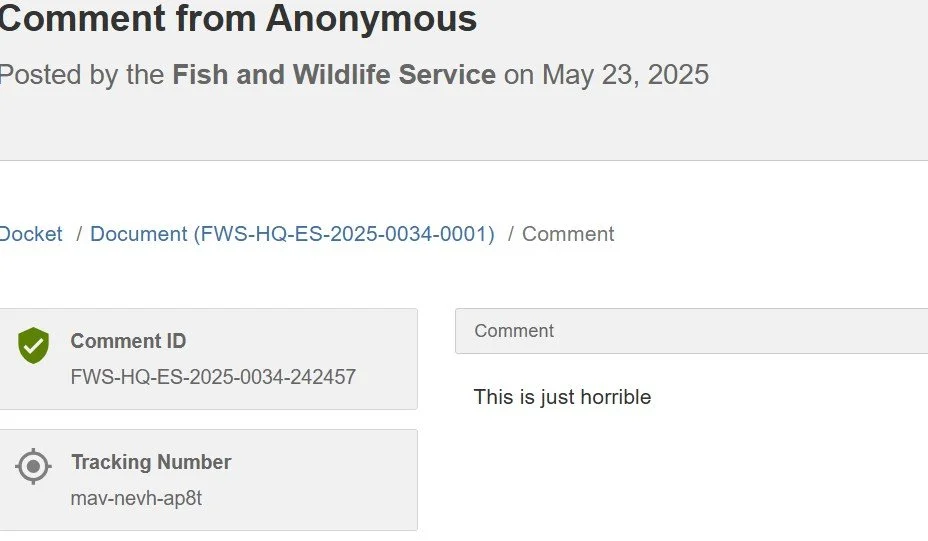
An anonymous user commented simply with, “This is just horrible.” My thoughts exactly!
Another commenter, Jacob Emory heartfully added, “Our ancestors saw this and decided we should be better than that. So why are we debating become worse? To go back to a worse time where we acted like barbarians, plundering and burning everywhere we went?”
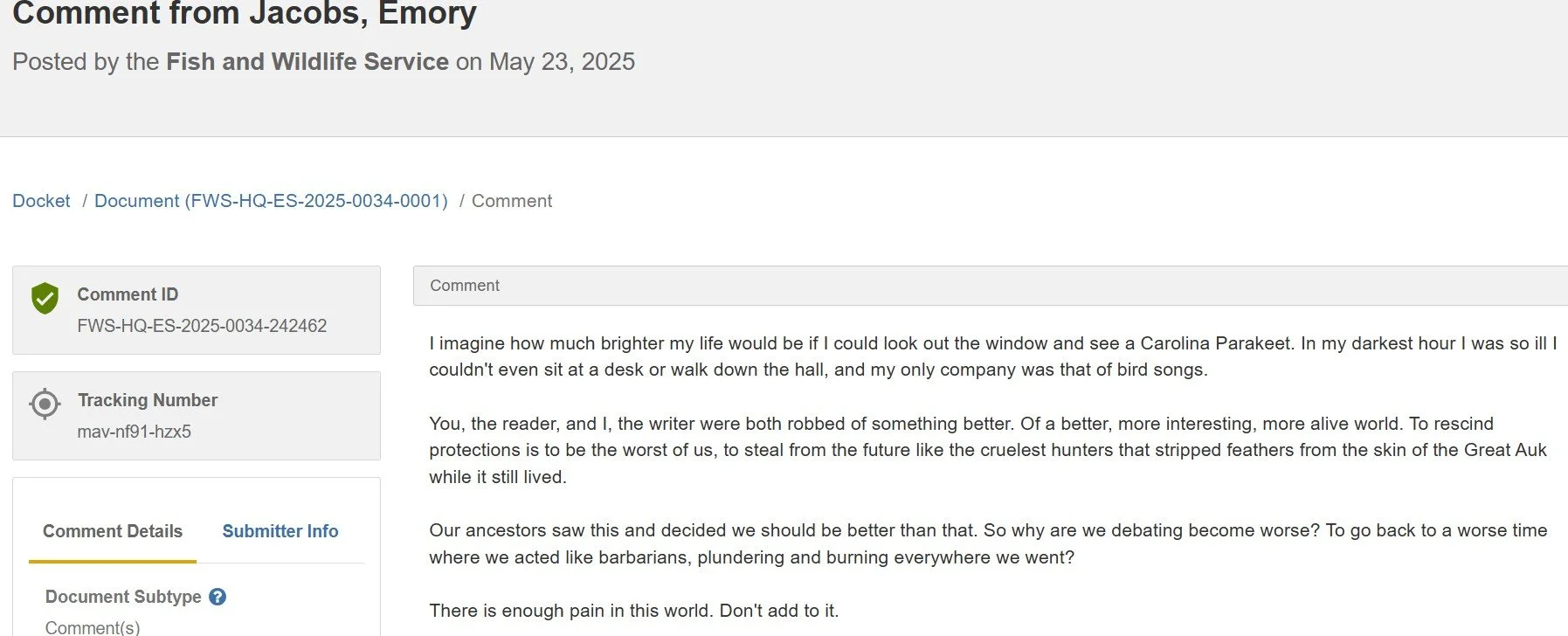
His full response appeared to be a reflection on the intrinsic value of birds and how they helped him through his darker times. He revisits the time when man were barbaric and burned everything in their way. Why would we go back to those times if there is no need!
My submitted comment focused on regulatory consistency and enforcement risk. I emphasized that narrowing the definition of harm would create enforcement ambiguity and increase uncertainty in project review processes.
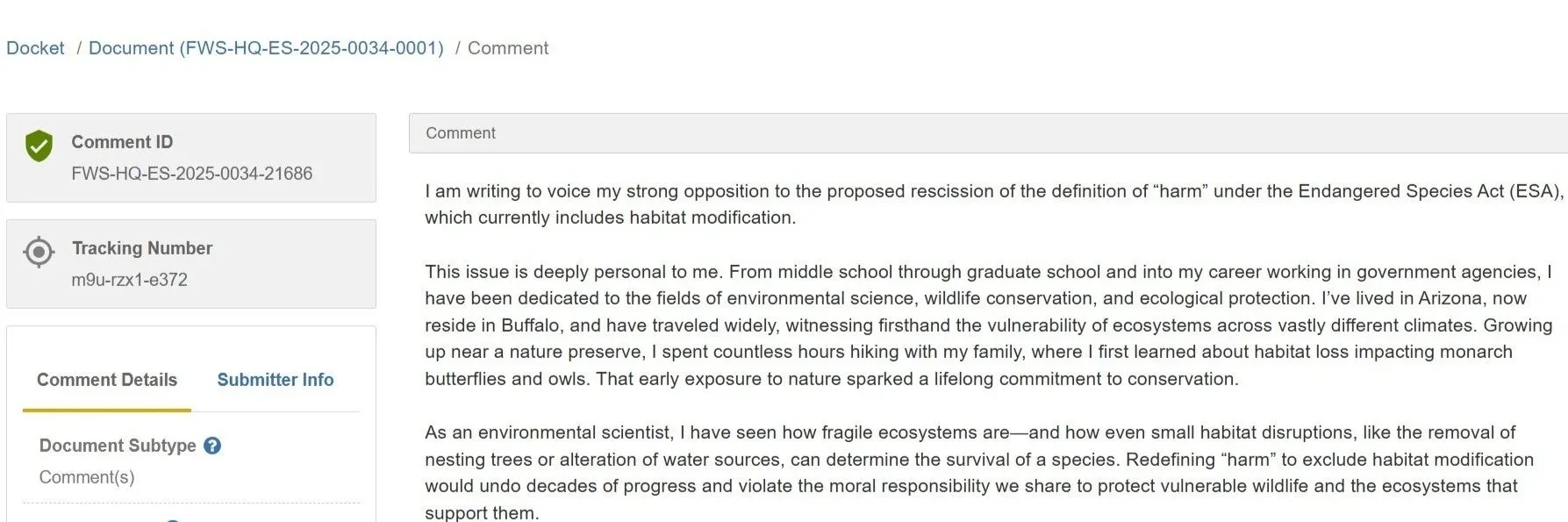
My Posted Comment
With the total submissions reaching 357,699, I guarantee there are some really interesting comments to read! I encourage you to explore them.
Why Would Anyone Support Narrowing “Harm”?
The policy rationale behind the proposal centers on statutory interpretation and regulatory scope.
Supporters of rescinding the definition argue:
• The statute should be interpreted narrowly
• “Take” should reflect direct actions against individual animals
• Habitat modification without direct injury expands liability beyond congressional intent
• ESA enforcement creates regulatory burden and land use constraints
This perspective reflects a textualist reading of the statute and an effort to limit federal regulatory reach.
Whether one agrees or disagrees, those arguments form the backbone of the proposal.
Where the Rule Stands Now
The Federal Register notice outlining the proposal is available here.
Additional regulatory status updates can be tracked through the Office of Information and Regulatory Affairs dashboard.
The agency is currently reviewing submitted comments.
Under the Administrative Procedure Act, the U.S. Fish and Wildlife Service must:
• Review substantive comments
• Address significant legal and scientific issues raised
• Provide reasoned justification in any final rule
If the agency finalizes the rule without adequately responding to major concerns in the administrative record, the rule becomes vulnerable to legal challenge.
Do Public Comments Matter?
Yes, procedurally.
Comments become part of the official administrative record. Courts review that record if litigation occurs. Agencies must respond to material arguments.
A volume of 357,699 submissions signals national engagement. It does not dictate outcome. But it increases scrutiny.
Interagency Context
This proposed change sits within broader joint rulemaking activity between NOAA’s National Marine Fisheries Service and the U.S. Fish and Wildlife Service, as described in NOAA’s proposed rulemaking notice.
ESA interpretation affects both terrestrial and marine species. Coordination across agencies shapes how enforcement standards are applied.
What Happens Next
The agency has three primary options:
• Finalize the rule as proposed
• Modify the rule in response to comments
• Withdraw the proposal
Until a final rule is published in the Federal Register, the existing regulatory definition of “harm” remains in place.
Definitions control enforcement. Enforcement controls outcomes. That is why this rulemaking drew nearly 358,000 public responses.
Now the administrative review process determines what survives.
Tags: #EndangeredSpeciesAct #ESAharmdefinition #USFWS #FWS-HQ-ES-2025-0034-0001 #policy #regulatory