Two Sides of Me: Why Being Alone Is Not the Same as Being Isolated in Environmental Work.
There are two versions of me in this photo. One is typing, producing, analyzing, meeting deadlines. The other is sitting nearby, calm, observant, not performing anything for anyone.
In environmental work, solitude is a functional state. Most of the work that actually matters in this field requires uninterrupted cognitive space. Writing, systems thinking, field analysis, synthesis across disciplines. None of that happens well in constant conversation.
The working self
The version of me at the computer is executing. Fieldwork often looks social from the outside, but much of the real thinking happens alone. Walking sites. Taking notes. Reviewing conditions. Sitting quietly after the fact and asking what this actually means. Solitude here is not withdrawal. It’s the time needed to understand what I just experienced.

“If you are lonely when you're alone, you are in bad company.”
Activity-based solitude
Being alone does not mean being disconnected. Much of my social time happens through shared activity rather than constant interaction. Working near others. Being outside together. Forced interaction, by contrast, often increases anxiety and reduces depth. Independence tends to produce healthier engagement, not less of it so when i do join my groups and socialize, I’ve mentally prepared.
Why constant social environments exhaust people
Many people feel anxious not because they are bad at socializing, but because their attention never gets a break. Constant stimulation, conversation, and performance overload the nervous system. Being alone stabilizes attention. It gives the brain a chance to reset, prioritize, and filter information again. Without that, everything feels urgent and nothing feels clear.
Two brains, one problem
One part of the brain executes. Another reflects. Modern work environments often demand both at the same time. Respond now. Think deeply. Collaborate constantly. Produce fast. This is way too much stimulation. Almost as much stimulation as watching 20 consecutive TikTok videos. Separating these modes matters. Reflection improves execution. Silence improves creativity. Emotional regulation improves when the brain is not forced to multitask beyond its limits.
Why people avoid being alone with their thoughts
Avoidance is often mistaken for sociability. Many people fear being alone because it means sitting with unresolved thoughts, emotions, or questions. I can certainly say that I had to dig deep into myself and struggle with this understanding, whereas many others have not. That avoidance shows up as anxiety, reactivity, shallow connection, and temporary stimulation from external parties. Solitude does not create these issues. It exposes them. And exposure is usually the first step toward resolving them. It WILL be uncomfortable but it may help you in the long run.
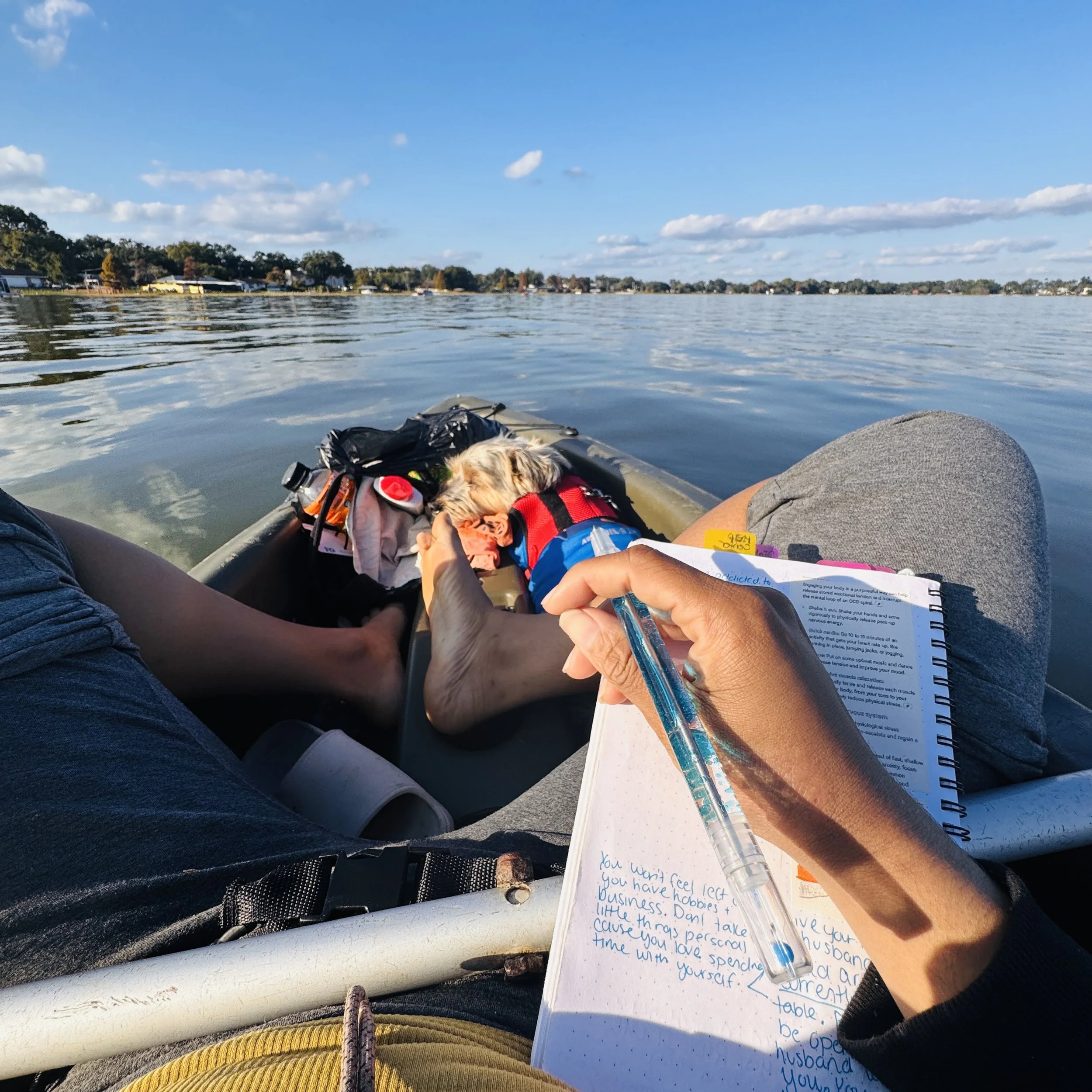
Roy (my dog) and I are resting in a Kayak on a lake.
I used this time to write notes and Roy used this time to sleep.
Solitude is ecological
Human systems follow the same rules as natural ones. Constant extraction degrades ecosystems. Constant stimulation degrades minds. Healthy systems alternate between engagement and withdrawal, growth and rest. Landscapes need recovery periods. So do people. After the event of a wildfire, years need to go by until vegetation can recover and homes can be restored. When rest cycles disappear, growth is limited.
Being alone is not isolation. It is part of a balanced system. In environmental work especially, time alone is not optional. It is how clarity happens. It is how better decisions get made. Not many people can handle being in the wilderness or unfamiliar places, and frankly, that is the reality of the conservation field at times.
The two versions of me are not competing. They are cooperating. And that is the point.
“TELL ME BELOW: What happens to your focus, thinking, and decision-making when you intentionally give yourself time alone to work, reflect, or be in nature without performing for anyone?”